
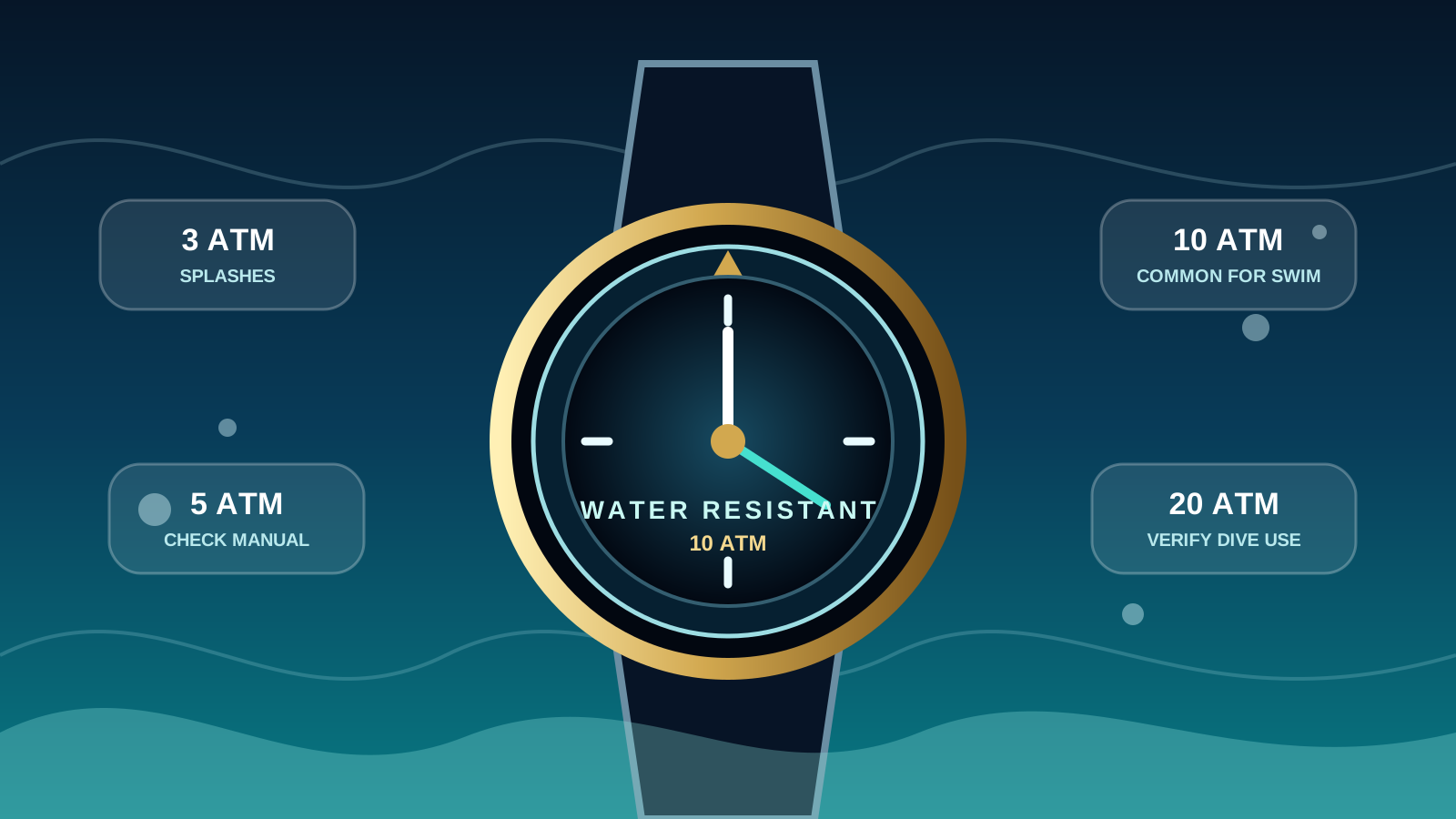
A watch water-resistance rating describes performance under defined test conditions. It is not a promise that the watch can be used at the printed depth in every real activity.
Why the printed number is misunderstood
Laboratory testing uses controlled pressure and specified procedures. Real use adds movement, temperature changes, impact, soap, salt, ageing seals and crown operation. Those conditions can change the risk.
The marking on the dial or case back is useful, but it must be interpreted together with the manual. ISO 22810 covers water-resistant watches, while ISO 6425 applies to divers' watches that meet additional requirements.
What common ratings usually suggest
The following is a conservative general framework. The manufacturer's instructions for the exact model override it.
3 ATM or 30 metres
Usually intended for accidental splashes and light rain. Do not assume it is suitable for swimming or showering.
5 ATM or 50 metres
Often provides stronger everyday protection, but swimming permission varies by manufacturer and model. Check the manual before submerging it.
10 ATM or 100 metres
Commonly selected for regular swimming and active everyday use when the manufacturer allows it. It does not automatically make the watch a professional dive watch.
20 ATM or 200 metres
Often suitable for more demanding water use and appears on many dive-style watches. Actual diving suitability depends on the complete design, instructions and whether the watch meets an applicable diver standard.
Water resistant is not permanently waterproof
Seals age. Crowns, pushers, crystals and case backs can be damaged. Battery replacement or case opening can disturb gaskets. A watch that passed a pressure test years ago may not still perform the same way.
Have water resistance checked after case opening, impact, crown damage or before important water use. Service timing depends on the manufacturer and your usage.
Crown and pusher rules
- Make sure the crown is fully closed before water exposure.
- Screw-down crowns must be threaded correctly without forcing them.
- Do not operate the crown under water unless the manufacturer explicitly permits it.
- Do not use chronograph pushers under water unless the exact model is designed and documented for that operation.
- Never force a gritty or damaged crown.
Showering and hot water
Showering is risky even when a watch has a strong rating. Heat changes materials, steam can challenge seals and soap reduces surface tension. Shampoo and cleaning products can also affect straps and gasket areas.
A simple rule is to remove the watch before hot showers, baths, saunas and steam rooms unless the manufacturer specifically approves that use.
Salt water and swimming pools
Salt and chlorine can remain around the bezel, crown, bracelet and case back. When the manufacturer permits swimming, rinse the closed watch gently with fresh water afterward and dry it with a soft cloth. Follow material-specific care instructions for leather, fabric and coated components.
Signs of water entry
Fogging or droplets under the crystal require prompt attention. Do not continue using crown or pushers. Keep the watch away from additional water and contact a qualified service centre quickly.
Do not rely on home remedies such as rice. Moisture can cause corrosion even after visible fog disappears.
Before swimming: a quick checklist
- Confirm the exact model's activity guidance.
- Check that the crown and case back are secure.
- Look for recent impact or visible damage.
- Consider the age of seals and last pressure test.
- Make sure the strap or bracelet is suitable for water.
- Avoid sudden extreme temperature changes.
- Rinse as instructed after salt or chlorinated water.
Common mistakes to avoid
- Treating metres as literal usable depth.
- Assuming every 5 ATM watch has the same swimming permission.
- Pressing pushers under water without explicit approval.
- Wearing leather straps repeatedly in water.
- Ignoring gasket checks after a battery replacement.
- Taking a water-resistant watch into a sauna.
- Believing a screw-down crown alone proves diving suitability.
Frequently Asked Questions
Can I swim with a 5 ATM watch?
Some manufacturers permit limited swimming and others do not. Check the exact manual. When the guidance is unclear, do not submerge it.
Is 100 metres water resistance enough for swimming?
It is commonly chosen for swimming, but the exact watch must be in good condition and the manufacturer must allow the activity.
Can I shower with a 10 ATM watch?
The pressure rating does not remove the risks from heat, steam and soap. Removing the watch is the safer practice unless the manufacturer explicitly approves shower use.
Does a dive-style bezel mean the watch is a diver's watch?
No. Styling and certification are different. Verify the exact standard, instructions and manufacturer claim.
Sources and verification
Last editorial review: August 2026.
How this guide was prepared
WatchQuill explains watch specifications in practical language, distinguishes general guidance from model-specific instructions, and links important claims to visible sources. Always check the current manual and warranty terms for the exact watch reference.
About WatchQuill’s editorial approach