
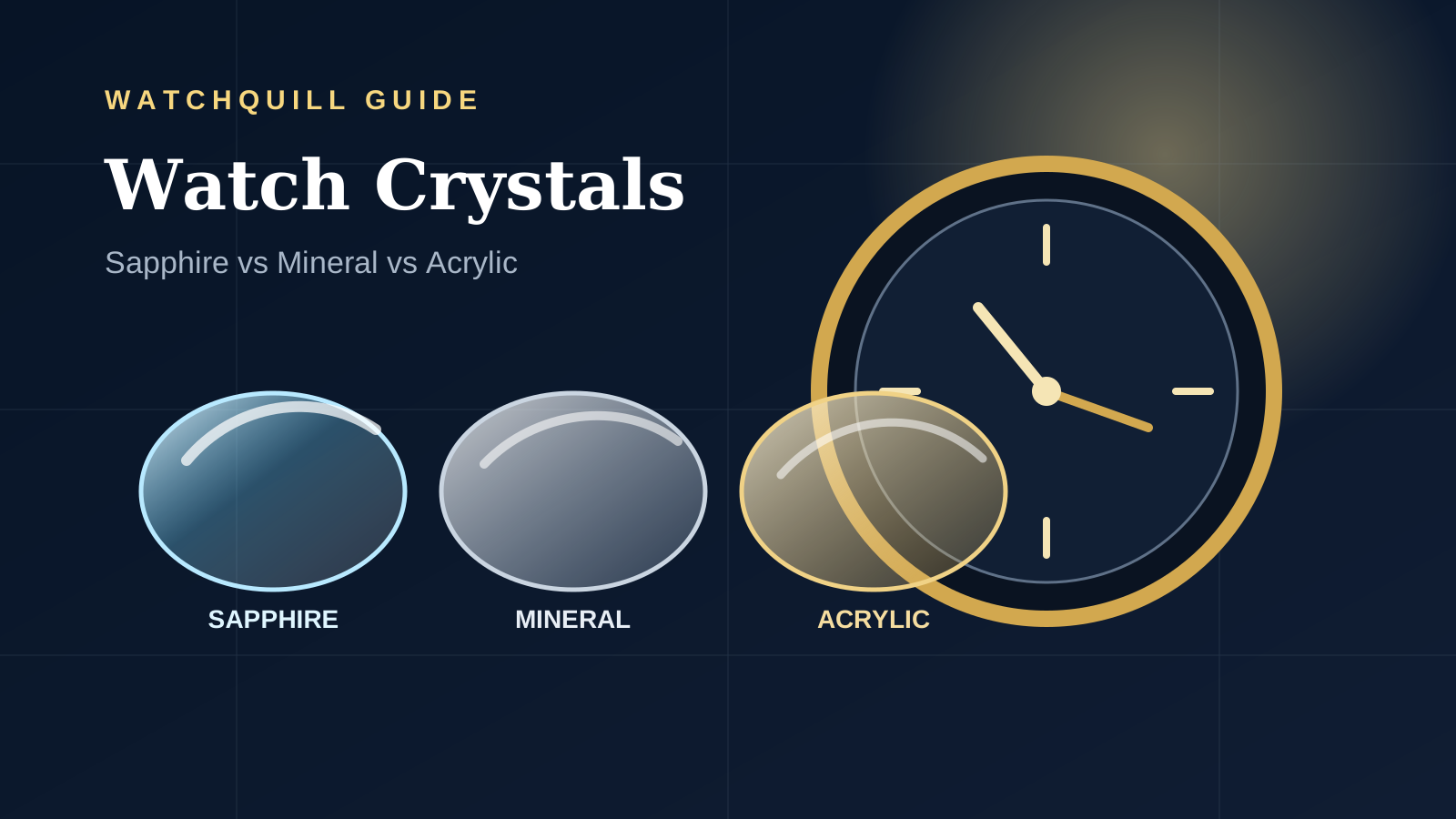
The watch crystal is the transparent cover above the dial. It protects the hands and movement from contact, dust and everyday impact, while strongly affecting scratch resistance, reflections, appearance and replacement cost.
Sapphire, mineral and acrylic at a glance
| Crystal | Main strength | Main trade-off | Often suits |
|---|---|---|---|
| Sapphire | Excellent scratch resistance | Higher cost and possible chipping under severe impact | Daily wear, premium watches and buyers who dislike scratches |
| Mineral glass | Balanced cost and durability | Can collect permanent scratches | Affordable everyday and sport watches |
| Acrylic | Light, impact-tolerant and often polishable | Scratches easily | Vintage designs, domed crystals and practical low-cost repair |
This comparison describes broad material behaviour. Thickness, shape, mounting method, coatings and case design also matter, so two watches using the same crystal material can perform differently.
What is sapphire crystal?
Watch sapphire is normally synthetic sapphire made from crystallized aluminium oxide. It is valued because it is much harder than ordinary glass and therefore resists common everyday scratches very well.
Sapphire is not automatically invisible or glare-free. Untreated sapphire can reflect strongly, especially on dark dials. Manufacturers may add anti-reflective coating to one or both surfaces. An external coating can pick up marks even when the sapphire beneath it remains intact, so a visible mark does not always mean the crystal itself has been scratched.
Advantages of sapphire
- Very strong resistance to scratches from normal daily contact.
- Maintains a clean appearance for a long time when treated carefully.
- Often used on watches where dial clarity and long-term finish matter.
- Available in flat, domed and boxed shapes depending on the watch design.
Disadvantages of sapphire
- Usually costs more than mineral or acrylic.
- Hardness does not mean it is impossible to break or chip.
- Strong reflections can reduce readability without effective anti-reflective treatment.
- Replacement may be expensive, especially for shaped or model-specific crystals.
What is mineral crystal?
Mineral crystal is hardened glass used widely in affordable and mid-priced watches. It is generally more scratch resistant than acrylic but less scratch resistant than sapphire.
Its greatest advantage is balance. A well-designed mineral crystal can provide good clarity, reasonable impact performance and a lower replacement cost than sapphire. The limitation is that scratches are normally difficult to remove cleanly. Deeply marked mineral glass is usually replaced rather than polished.
Advantages of mineral glass
- Practical balance of cost, clarity and durability.
- Better scratch resistance than typical acrylic.
- Common enough that replacement options may be easier to source.
- Suitable for many everyday, digital and sport watches.
Disadvantages of mineral glass
- Desk edges, masonry, sand and hard debris can leave permanent scratches.
- It does not stay pristine as reliably as sapphire.
- Marketing names such as hardened mineral or proprietary glass do not provide a universal performance standard.
What is acrylic crystal?
Acrylic crystal is a transparent plastic material. It was common on earlier watches and remains popular in vintage-inspired models, some tool watches and designs that need a deeply domed profile.
Acrylic scratches much more easily than sapphire or mineral glass. Its advantage is that many light surface scratches can be polished by a competent owner or watchmaker using an appropriate product. Acrylic is also light and tends to deform or mark before shattering like brittle glass.
Advantages of acrylic
- Light and usually inexpensive to replace.
- Many superficial scratches can be polished.
- Can create warm distortion and vintage character at the edge of a domed crystal.
- Good impact tolerance for specific designs.
Disadvantages of acrylic
- Collects scratches quickly during ordinary use.
- Can develop haze, crazing or deeper damage from chemicals, age or incorrect polishing.
- May look less crisp to buyers who prefer modern flat sapphire.
What about Hardlex, hardened mineral and sapphire-coated glass?
These names require careful reading.
Hardlex is Seiko's proprietary hardened mineral crystal. Other manufacturers use terms such as hardened mineral, K1 mineral or proprietary glass. Those labels can indicate treatment or formulation, but they do not create one universal ranking that applies across every brand.
Sapphire-coated mineral is not the same as a solid sapphire crystal. A coating can improve surface behaviour, but the base material and coating thickness matter. When a listing simply says sapphire without explaining whether it is solid sapphire or coated mineral, check the official specification for the exact reference.
Scratch resistance is not the same as impact resistance
A harder surface generally resists scratching better, but hardness alone does not tell you how a crystal will respond to a sharp blow. Shape, thickness, edge support and case construction affect impact performance.
This is why the statement sapphire is always best is too simple. Sapphire is usually the most convenient choice for scratch-conscious daily wear, but a manufacturer may choose mineral or acrylic for cost, shape, impact behaviour, historical accuracy or easier field replacement.
Does anti-reflective coating matter?
Yes. Crystal material and anti-reflective treatment solve different problems.
- Crystal material mainly affects scratching, impact behaviour, weight and cost.
- Anti-reflective coating reduces distracting reflections and can improve dial readability.
- An internal-only coating is protected beneath the crystal.
- An external coating may provide stronger visual effect but can be exposed to scratches and wear.
A clear mineral crystal with good geometry can sometimes look easier to read than reflective sapphire. Evaluate the complete watch rather than treating sapphire as the only quality signal.
Which crystal should you choose?
Choose sapphire when
- You wear the watch frequently and want to minimize visible scratches.
- The watch is expensive enough that maintaining a clean appearance matters.
- You are comfortable with a higher replacement cost.
- The model has acceptable anti-reflective performance.
Choose mineral glass when
- You want a practical watch at a moderate price.
- Replacement cost matters more than keeping the surface nearly scratch-free.
- The watch may experience everyday knocks and you accept eventual wear.
- The manufacturer uses mineral as part of a well-supported design.
Choose acrylic when
- You enjoy vintage character or a strongly domed crystal.
- You prefer a crystal that can often be polished after light scratching.
- Low weight and affordable replacement are useful.
- You understand that regular cosmetic maintenance may be needed.
How to verify the crystal before buying
- Find the complete model or reference number.
- Check the official product specification or manual.
- Look for the exact wording: sapphire, mineral, acrylic or sapphire-coated mineral.
- Check whether anti-reflective coating is internal, external or on both surfaces.
- Ask about replacement availability and cost for unusual shapes.
- Do not rely on water-drop, hardness or tapping tests performed on a seller's watch.
- Keep written evidence of the advertised specification when buying online.
For seller and warranty checks, use our safe online watch buying guide.
Can a scratched crystal be repaired?
- Acrylic: light scratches can often be polished, but deep cracks, crazing or distortion may require replacement.
- Mineral: replacement is normally more reliable than attempting to remove a deep scratch.
- Sapphire: a true scratch or chip generally requires professional assessment and often replacement. Marks may sometimes be on an external coating rather than the sapphire.
Crystal replacement can affect water resistance because the crystal and gasket are part of the sealed case system. After replacement, have the watch checked according to the manufacturer's service procedure.
Common buying mistakes
- Paying more only because the listing says sapphire.
- Assuming sapphire cannot chip or break.
- Assuming every proprietary mineral crystal performs identically.
- Confusing sapphire coating with solid sapphire.
- Ignoring anti-reflective treatment and readability.
- Using unofficial scratch tests that can damage the watch.
- Forgetting to price a shaped replacement crystal before buying a discontinued model.
Frequently Asked Questions
Is sapphire crystal worth it on a watch?
It is usually worth paying for when scratch resistance and long-term appearance are priorities. It matters less when the watch is inexpensive, frequently exposed to severe impacts or intentionally uses acrylic for vintage character.
Can keys scratch sapphire crystal?
Ordinary keys are unlikely to scratch good sapphire, but hard mineral debris, abrasive compounds, damaged coatings and severe contact can still leave marks. Treat scratch resistant as strong protection, not a guarantee.
Is mineral crystal bad?
No. Mineral glass is a sensible, widely used material. Its main compromise is that visible scratches are more likely than on sapphire and are normally not easy to polish away.
Is acrylic crystal cheap quality?
Not necessarily. Acrylic can be an intentional engineering and design choice. It is common in historically accurate watches and can offer useful impact tolerance and easy cosmetic restoration.
Can I replace mineral crystal with sapphire?
Sometimes, but not automatically. Dimensions, curvature, gasket design, tolerances and case construction must match. Use a qualified watchmaker and confirm that water resistance can be tested afterward.
Sources and verification
This guide compares broad material behaviour using manufacturer guidance. The official specification and service documentation for the exact watch remain the final authority.
Last editorial review: August 2026.
How this guide was prepared
WatchQuill explains watch specifications in practical language, distinguishes general guidance from model-specific instructions, and links important claims to visible sources. Always check the current manual and warranty terms for the exact watch reference.
About WatchQuill’s editorial approach