
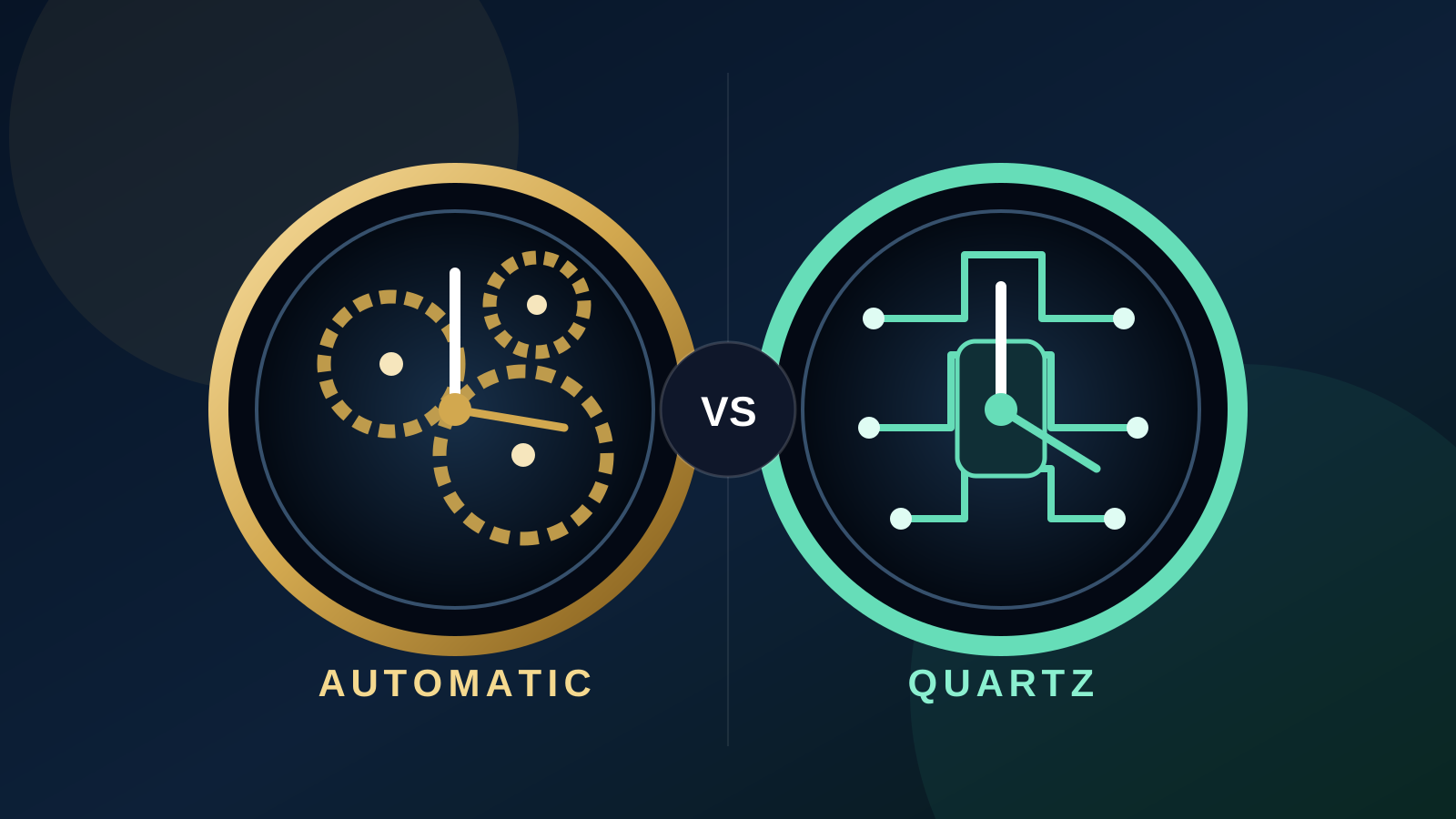
An automatic watch is powered by a mechanical mainspring that is wound by wrist movement. A quartz watch uses an electronic oscillator regulated by a quartz crystal, normally powered by a battery or rechargeable cell.
Automatic vs quartz at a glance
- Accuracy: Quartz is normally more accurate in everyday use.
- Convenience: Quartz can usually be left in a drawer and worn again without resetting, provided the battery still has charge.
- Maintenance: Automatic movements need periodic professional servicing. Standard quartz watches usually need battery replacement and occasional gasket or pressure checks.
- Experience: Automatic watches offer visible mechanics, a sweeping seconds hand on many models and a stronger connection to traditional watchmaking.
- Price: Both types exist at many prices, but quartz often delivers more practical performance for less money.
How an automatic watch works
An automatic movement stores energy in a mainspring. A rotor turns as your wrist moves and helps wind that spring. The stored energy is released through the gear train and regulated by the escapement and balance assembly.
Automatic does not mean the watch runs forever. When it is not worn long enough, the power reserve eventually empties and the watch stops. The exact winding method, power reserve and time-setting instructions depend on the calibre, so the manual for the exact model is the final authority.
Advantages of automatic watches
- No disposable battery is normally required for the movement.
- Mechanical construction can be fascinating to observe and learn about.
- Many owners enjoy the ritual of winding, setting and maintaining the watch.
- A serviceable mechanical movement can remain usable for a very long time when parts and qualified service are available.
Disadvantages of automatic watches
- Daily accuracy is usually less precise than ordinary quartz.
- The watch may stop after sitting unused.
- Servicing can cost significantly more than a battery change.
- Automatic movements can make a case thicker because of the rotor and movement architecture.
- Magnetism, shock, wear and lubrication condition can affect performance.
How a quartz watch works
A quartz movement uses an electronic circuit and a quartz oscillator to regulate timekeeping. In a conventional analogue quartz watch, the circuit controls a small motor that advances the hands.
Quartz is a broad category. It includes standard battery-powered watches, solar-powered watches and high-accuracy quartz models. Always check the exact movement rather than assuming every quartz watch has the same battery life, accuracy or service needs.
Advantages of quartz watches
- Strong everyday accuracy.
- Low maintenance for most owners.
- Usually thinner and lighter choices are available.
- Good value across affordable price ranges.
- Practical for people who rotate several watches.
Disadvantages of quartz watches
- A conventional battery eventually needs replacement.
- Poor battery handling can damage seals or scratch the case.
- Some inexpensive modules are replaced rather than repaired.
- Owners who value visible mechanics may find quartz less emotionally engaging.
Which movement is more accurate?
Quartz is the practical winner for most buyers. Mechanical-watch accuracy varies by calibre, condition, position, temperature, winding state and regulation. Certification programs such as COSC and METAS define performance requirements for watches submitted to those programs, but a certification claim should always be verified for the exact reference.
Do not compare an uncertified automatic watch with a high-accuracy quartz model and assume the result applies to every watch. Read the manufacturer's stated tolerance for the exact calibre.
Which movement costs less to own?
Quartz usually has the lower routine cost. A battery replacement is often simpler than a complete mechanical service, although water-resistance checks, gaskets, damaged crowns and other repairs can still add cost.
Automatic ownership should include a future service budget. Service intervals are not universal. Follow the manufacturer's current recommendation and respond to symptoms such as large accuracy changes, reduced power reserve, rough winding or moisture under the crystal.
Which is better for daily wear?
Choose based on your routine.
Quartz is usually better when
- You need dependable time with minimal adjustment.
- You want a slim watch for office or formal use.
- You rotate several watches.
- You prefer predictable maintenance costs.
- The watch may sit unused for long periods.
Automatic is usually better when
- You wear one watch most days.
- Mechanical engineering is part of the appeal.
- You accept periodic resetting and servicing.
- You want a traditional ownership experience.
- The exact model has good service support where you live.
What about solar quartz?
Solar quartz combines quartz regulation with a rechargeable cell powered by light. It can reduce ordinary battery changes, but it still needs correct charging and storage. Long periods in darkness can exhaust the stored charge. Follow the model's charging guide rather than placing the watch near excessive heat.
Common buying mistakes
- Assuming automatic means better quality.
- Assuming quartz means cheap or disposable.
- Comparing only movement type while ignoring fit, crystal, bracelet, water resistance and warranty.
- Buying an automatic watch without checking service access.
- Believing a movement never needs maintenance because it has no ordinary battery.
- Paying extra for certification without confirming that the exact watch is certified.
A practical decision checklist
- Decide how often you will wear the watch.
- Choose how much time adjustment you are willing to accept.
- Confirm the exact movement and stated accuracy.
- Check power reserve or expected battery and charging behaviour.
- Review service access and warranty support in your country.
- Compare total ownership cost, not only purchase price.
- Try the watch on because movement choice can affect thickness and weight.
Frequently Asked Questions
Is an automatic watch better than quartz?
Not universally. Automatic is better for buyers who value mechanics and traditional watchmaking. Quartz is better for buyers who prioritize accuracy, convenience and lower routine cost.
Does an automatic watch need a battery?
A conventional automatic mechanical movement does not use a battery to power timekeeping. Some hybrid or electronically assisted products use different systems, so verify the exact model.
Can a quartz watch last for decades?
Yes, many can, provided the movement, case and replacement parts remain serviceable and leaking batteries or moisture do not cause damage.
Should a beginner buy automatic or quartz?
Quartz is the easiest entry point. Automatic is also a good first watch when the buyer understands winding, accuracy expectations, power reserve and future servicing.
Sources and verification
This guide was reviewed against primary technical and consumer sources. The manual for the exact watch remains the final authority.
Last editorial review: August 2026.
How this guide was prepared
WatchQuill explains watch specifications in practical language, distinguishes general guidance from model-specific instructions, and links important claims to visible sources. Always check the current manual and warranty terms for the exact watch reference.
About WatchQuill’s editorial approach